
Pontefract is a town steeped in history. With origins dating back to the Roman settlement of Lagentium, Pontefract has been an established place for over 2000 years. It should come as no surprise that the town is home to many historic buildings. A number of properties in Pontefract are ‘listed buildings’, meaning they are recognised as having special architectural or historic interest.
Listed buildings are graded to indicate their relative significance. Grade I represents buildings of exceptional national importance. Grade II* denotes particularly important structures. The majority of listed buildings are Grade II, highlighting special historic interest at a local level. Owning or altering a listed building comes with legal responsibilities to protect its heritage. Many of Pontefract’s historic gems benefit from listed status.
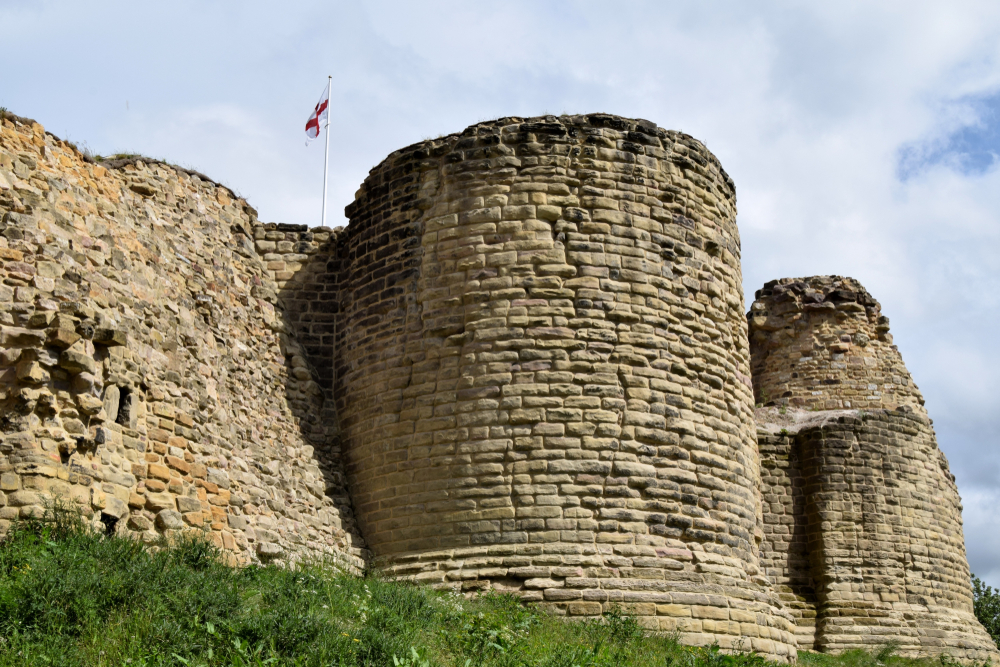
One of the town’s most iconic sites is Pontefract Castle. The ruins of this formidable fortress hold Grade I listed status. Pontefract Castle dates from around 1070, built shortly after the Norman Conquest. It played a pivotal role in the struggle for power during the Middle Ages. The castle changed hands several times during the Wars of the Roses. Though now in ruins, the remains clearly illustrate the castle’s medieval might. English Heritage operates the castle as an open tourist attraction.
The town hall on Market Place is a striking Grade II* listed building at the heart of Pontefract. Built in 1866 to replace an earlier hall, the impressive structure was designed by architect George Gilbert Scott. It features a mix of Gothic and Classical architectural styles. The town hall remains an integral part of local civic life today.
St Giles Church is another Grade I listed site. Parts of the existing church date from the 12th century, including the distinctive herringbone masonry of the tower. However, St Giles Church has origins dating back to the 7th century. The historic church contains notable 14th and 15th century funerary monuments plus medieval effigies. It remains an active place of worship.
Grade II listed buildings are more numerous across Pontefract. The famous Red Lion Pub has a distinctive Georgian facade. Dating from the 18th century, this was once the residence of local magnate George Chaytor. The Red Lion is reputedly one of Yorkshire’s oldest pubs.
The buildings of the old Pontefract Dispensary on Northgate are also Grade II listed. Constructed in 1847, this ornate structure once provided medical services to local residents. Nearby, the Mason’s Arms is another 18th century Grade II listed pub with original interior features.
An iconic structure on Northgate is the Grade II listed Northgate House. Built around 1700, it has a grand pedimented facade. The building is adorned with pilasters, friezes and ornate masonry. It now contains residential apartments but the exterior remains unchanged.
The former Pontefract General Infirmary buildings are now residential but retain Grade II listed status. These prominently sited buildings date from the late 18th century. Nearby Grade II listed townhouses on Gillygate and Horsefair display Pontefract’s Georgian heritage.
Pontefract’s love of horseracing has left a built legacy. The grandstand at the racecourse holds Grade II status. It dates from 1895 and was designed by renowned Victorian architect, Alfred Waterhouse. The neo-classical style grandstand remains integral to major race days.
The old railway station, now relocated, is a Grade II listed building. Opened in 1848, the station buildings and adjacent cottage display classic Victorian railway architecture. The old station is now in private ownership but will hopefully be restored.
Maintaining historic listed buildings often requires sensitive upgrades. Companies like locally based K Glazing LTD specialise in replicating traditional features like sash windows. Skilled craftspeople can replace damaged sections while retaining a building’s original character. Quality suppliers like K Glazing allow homeowners to improve comfort and energy efficiency without comprising heritage.
The historic buildings of Pontefract represent architectural milestones across centuries. They provide tangible links to key moments in the town’s past. Though just a selection, the listed buildings highlighted here show the rich heritage Pontefract offers. The preservation of these landmarks will ensure the town’s unique character endures long into the future.