
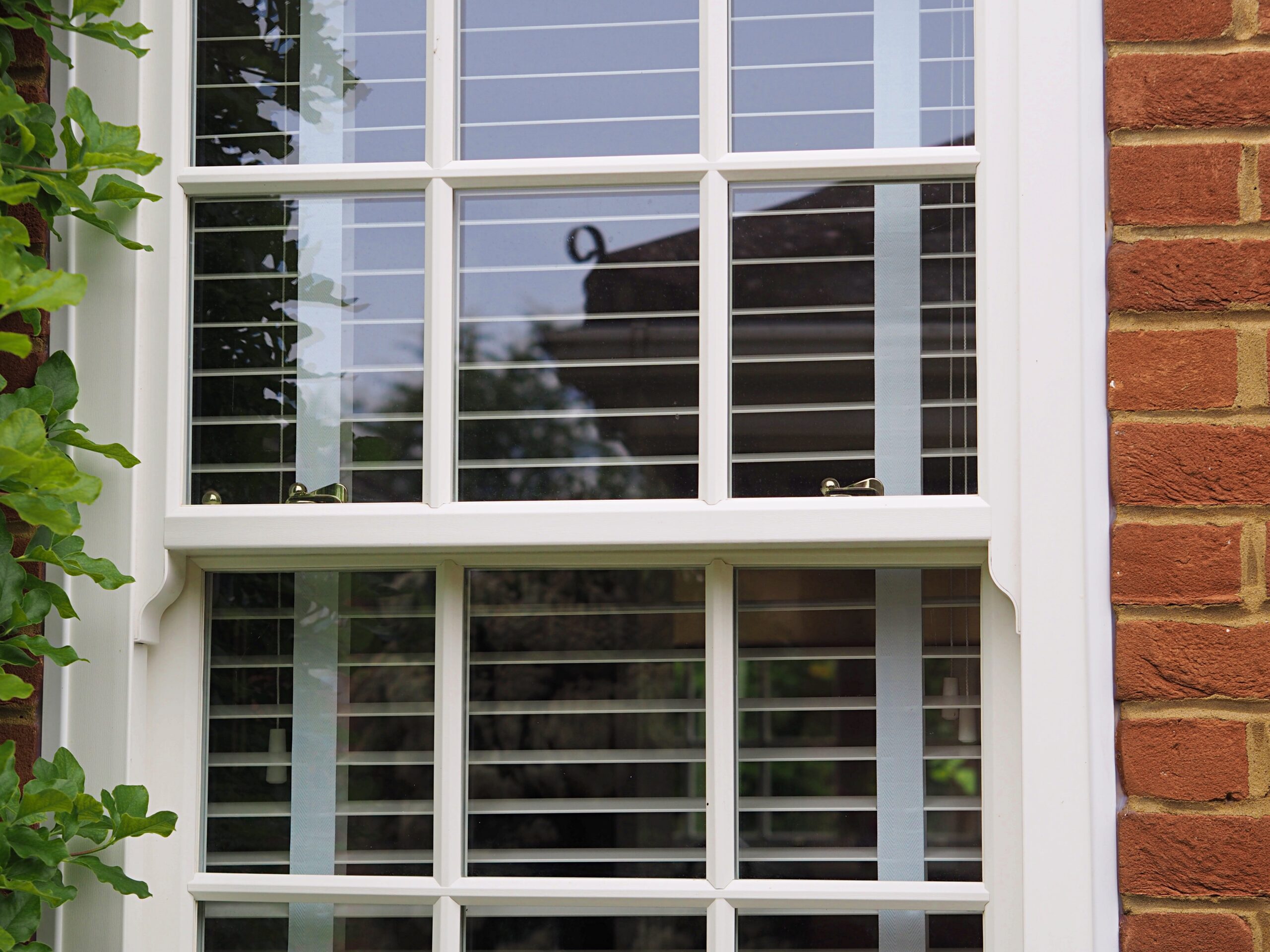
Sash windows slide up and down vertically in the frame thanks to a handy pulley system inside. You push up the bottom sash while pulling down the top sash to get nice and airy, unlike your standard double-hung windows that tilt. The sashes glide on tracks with counterweights and ropes doing the work, so you don’t need to struggle.
Components of a Sash Window
· Weights – Lead or cast-iron weights counterbalance the sashes and are connected to them via a cord and pulley system. The weights slide up and down in narrow channels in the window frame.
· Sash cord – Sturdy rope that connects the sliding sash to the counterweight. The cord runs over a pulley at the top of the frame.
· Meeting rails – Horizontal sash parts that meet when the window is closed. The rails interlock to seal out drafts.
· Pulleys – Wheels are mounted at the top of the window to guide the sash cord.
· Parting beads – Narrow wooden strips that cover the gap between the sashes, keeping the upper sash in place.
The Pulley System
The secret to how sash windows slide up and down so quickly is the pulley system inside the window frame. Weights and cords are attached to each half of the window (the “sashes”). When you lift the bottom sash, its weight slides down inside the frame, balancing out the weight so you can move the window smoothly.
And when you lower the top sash, its weight goes up to counter it too – so, weights on cords take the strain, not you. The sashes can stop at any point and stay put.
Advancements in Sash Windows
While traditional sash windows had lead weights, modern versions often substitute steel, nylon, or concealed spring balances. Spring balances with spiral drums offer smoother operation than old-fashioned sash windows.
The pulley-and-cord system has proven reliable for lifetimes, but newer sash windows may incorporate advanced weatherstripping and double glazing for increased efficiency. However, the basic operational principles remain unchanged.
The Benefits of Sash Windows
Sash windows are still around after all these years and with good reason. They let in generous sunlight with their slim vertical design providing nice wide openings. Operating sash windows is also a breeze – gently push up the bottom sash or pull down the top to open it. It’s way simpler than windows that only tilt. The smoothly gliding panes allow you to customise the airflow circulating through. Simply adjust to your desired ventilation level.
Here’s where sash windows shine: the cleverly hidden pulley mechanism inside the frame. It bears the weight of the panes, so you are kept from heaving them open. Thanks to this ingenious system, anyone can lift these tall windows with barely a touch.